
Metatarsalgia IPK (Intractable Plantar Keratosis)Condition
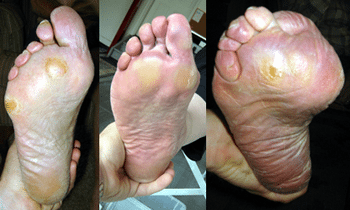 Metatarsalgia is a broad term meaning pain at the ball of the foot. This pain can be very specific and localized. Pain on the plantar aspect (bottom) of the first metatarsal head can be sesamoiditis. Pain at the second, third, fourth, and fifth is usually pressure metatarsalgia. Metatarsalgia can be caused by, abnormal biomechanics, muscle imbalances, or ligament laxaties. Pressure metatarsalgia occurs when fore foot weight bearing is mal-distributed. The metatarsals can fall out of normal alignment and one or several can sit lower than the other metatarsal heads and bear an excessive amount of weight and pressure. Imagine a table with five legs, one on each corner and one in the middle which is longer than the other four on the corners. The table will be high centered on the middle or fifth leg. This leg will bear an excessive amount of weight and pressure. The natural fat pads under the metatarsal heads that normally cushions and protects them gradually wear out. The end result is walking on bone.
Sometimes the fat pad can shift forward and impinge on nerves and cause a numb, tingly, or aching feeling in the toes. Without the natural fat pad present, a battle takes place between the insole of the shoe and the metatarsal head bones, and the skin is caught in the middle. This can cause plantar callosities than can be very large and painful. Sometimes there are no calluses at all. Another common symptom is the feeling of walking on a rock or pebble inside your shoe at the ball of the foot. With pressure metatarsaglia it is usually more painful to walk bare foot and more comfortable with your shoes on. Going barefoot on a hard floor such as tile or wood is very uncomfortable. Cushion insoles can offer limited relief. This will usually last for only a short time.
A custom orthotic to properly distribute weight evenly over the entire plantar surface of the foot will work the best. The orthotic must address biomechanical concerns because excessive pronation usually contributes to pressure metatarsalgia. Good medial longitudinal support and transverse metatarsal arch support is an absolute necessity. The natural fat pad under the heads of the metatarsal bones must also be replaced to absorb shock and shearing forces. We use a medical grade silicone or a professional quality viso-elastic polymer gel within the orthotic to cushion and protect this area. A stretching exercise program and toe grasping exercises should be started as soon as possible. Low heeled shoes with a broad toe box and firm heel counters should be worn. The shoes should have a removable insole to accommodate the custom orthotic. Avoid high-heeled shoes. Ask your health care professional what will work best for you.